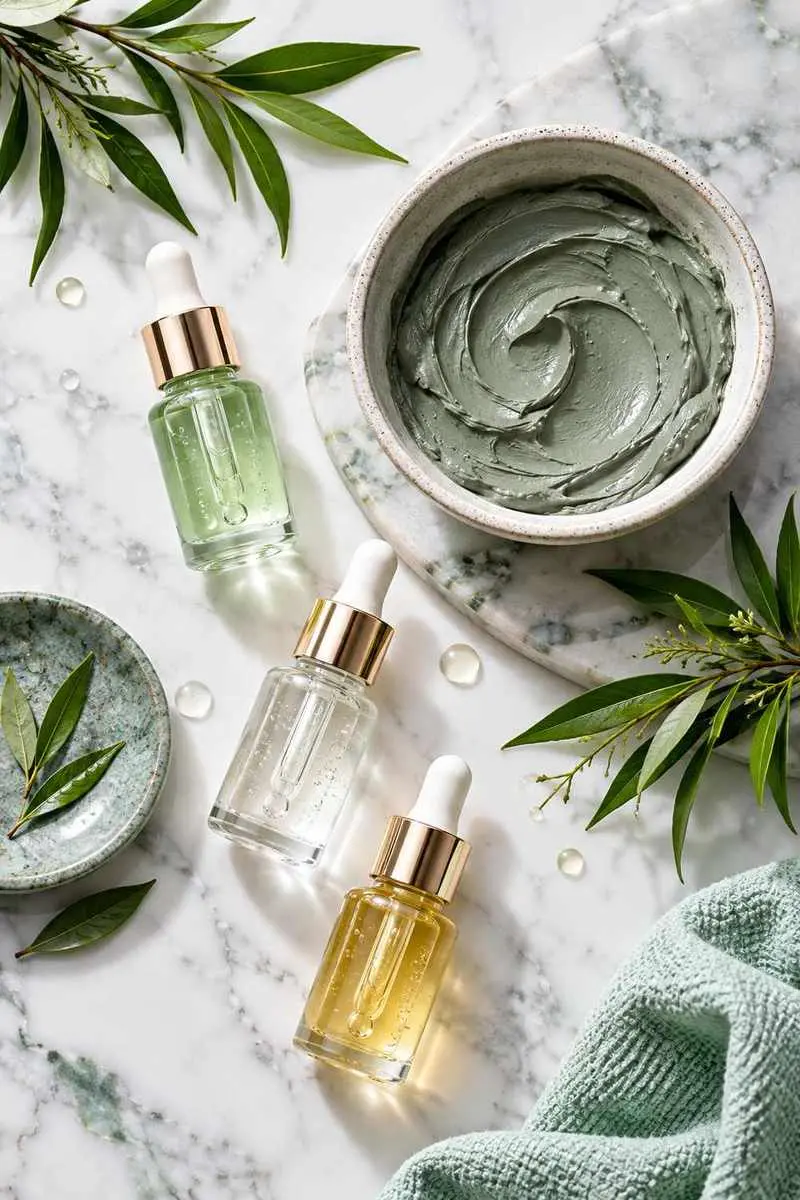
8 Differences Between Sugaring and Waxing
Sugar paste is sugar, water and lemon, used at room temperature, applied against the hair and pulled off with the growth — which is why it stings less and lifts only dead skin cells. Wax is a resin or beeswax base that has to be warmed, applied with the growth and pulled against it, so it grips the skin as well as the hair. Both need about 3–7 mm of growth and both leave you smooth for three to four weeks. The practical differences are sensitivity, ingrown hairs, clean-up — sugar rinses off with warm water, wax needs oil — and price.
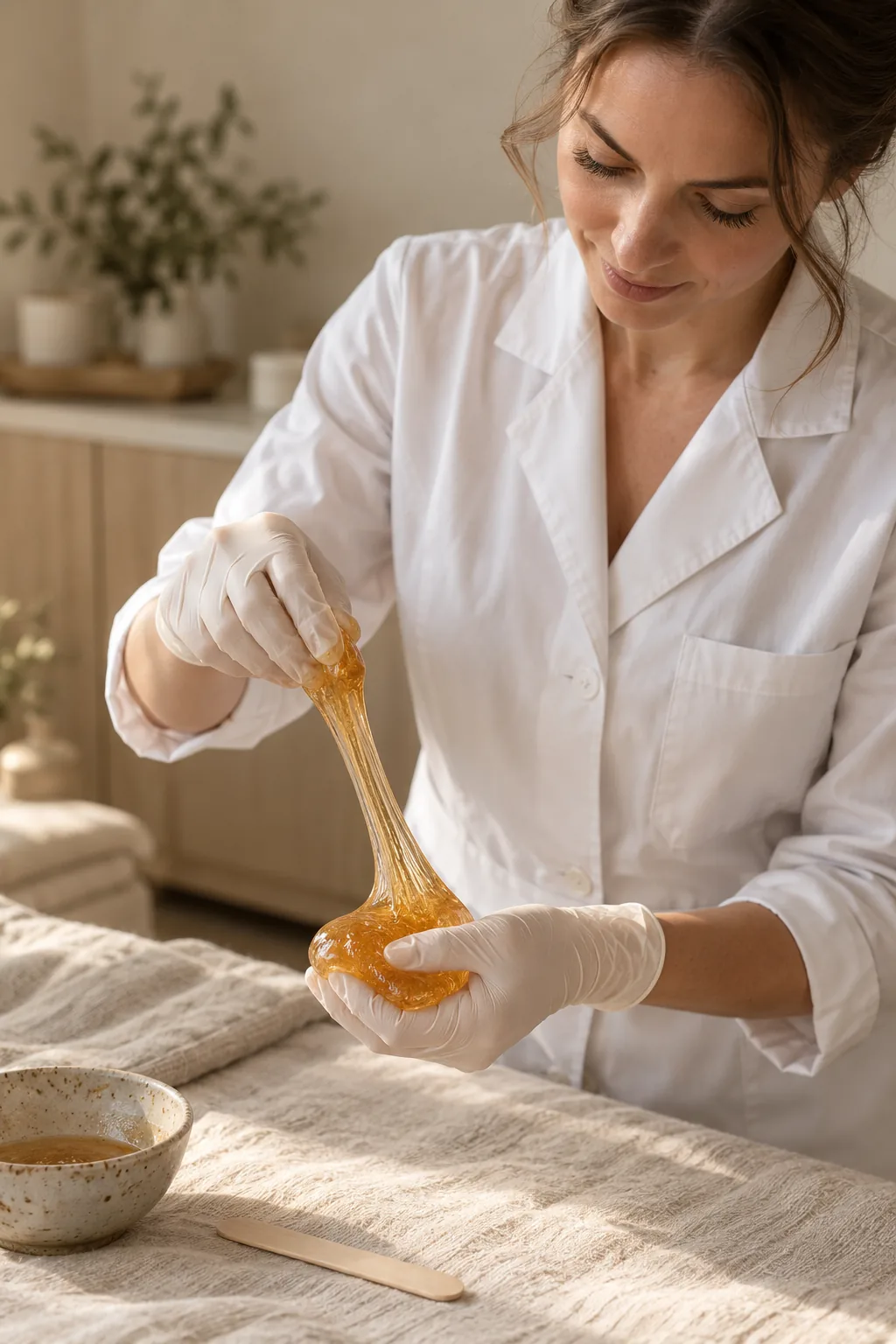
Despite the fact that waxing has become one of the most popular methods for hair removal almost everywhere, other methods have also gained considerable popularity in the modern beauty industry. Among a wide range of hair removal options, sugaring is one of the methods that most specialists turn to, especially when working with clients whose skin can sometimes not handle wax products. Sugaring has proven more suitable for women with sensitive skin.
What’s Sweet About Sugaring
While various methods, such as laser or electrolysis, are very common due to their “manufacturability” and “innovation”, the ancient method of hair removal using sugar syrup is still an effective and popular technique today. In fact, a large percentage of accredited cosmetologists promote this technique for their customers because of the benefits it has on the skin.
As a method of hair removal, sugaring has been around for more than two thousand years with its origins being in ancient Egypt and Persia. It is well known that Cleopatra herself used this method to achieve a sleek silkiness to her skin. The most interesting thing about sugaring is the simplicity of the recipe for preparing the paste consisting of sugar, lemon and water.
Which method suits your skin is a thirty-second conversation with the esthetician.
Book sugaringHow Effective Is waxing?
Unlike sugaring paste, in pharmacies and stores you can find a huge number of various strips and bases for waxing. These products are produced in factories using natural ingredients such as beeswax and all kinds of additives, such as flavors or essential oils, which are designed to smooth the skin.
Waxing products were first made in France in the 1930s but waxing as a method of hair removal was not popular until the 1950s when women hairless legs and in bikinis were starting to be shown in advertisements and magazines. Nowadays, waxing treatments for any part of the body can be carried out in many professional spas or beauty salons.
Unlike sugar paste, the wide range of waxing products you can find on the market today is almost endless. Thus, similar solutions can be found for sensitive, oily, or normal skin. Also wax products exist that melt at low temperatures or have fruity aromas and essential oils.
Sugaring hair removal vs Waxing
Although both methods of hair removal may seem quite similar, in fact, there are several technical differences between them. They differ in the way they are applied and pulled from the skin.
Pros and Cons of Waxing
Waxing has the following positive aspects:
- decreased hair growth activity,
- lack of damage to the bulb,
- long-term effect (up to 3 weeks),
- the possibility of performing at home.
The disadvantages of the method include:
- significant risk of ingrown hairs,
- the presence of pain,
- the need to grow the correct hair length,
- use of a product of a certain temperature.
Pros and Cons of Sugaring
Sugaring has undeniable advantages that make this method of the hair removal popular. The positive aspects include:
- plasticity of the paste, which provides deep penetration and subsequent enveloping of the hair bulb,
- simplicity of the removal method,
- the duration of the effect, varying from 10 to 45 days on average.
- the product used is hypoallergenic, containing natural and skin-friendly components.
- insignificant risk of burns or microtrauma when observing the technology.
- low level of pain.
- gradual increase in the interval between procedures due to weakening of hairs.
- the possibility of use for varicose veins.
- total cost of sessions.
- getting rid of ingrown hairs.
The disadvantages of sugaring are fewer. The method has several contraindications, among which are usually noted:
- local damage to the skin in the form of abrasions or scratches, wounds.
- furunculosis.
- thrombophlebitis.
- early and late pregnancy.
Other disadvantages may be the need to avoid some cosmetics and avoid visiting a sauna or the beach. Lingerie should be made from natural fabrics to reduce the risk of irritation or rash.
Waxing Method
- In most cases, waxing products are made from rubber substrates consisting of both natural and chemical ingredients.
- Often, the method involves the use of a spatula, spoon, or other auxiliary tools during removal.
- Hair length – 1/16 inch (3mm) – 1/4 inch (7mm)
- Before use, it is necessary to warm up wax, although there are products that melt even at low temperatures.
- Not all products are good for especially sensitive skin. In this case, it is better to choose between a thick or ultra-soft consistency wax.
- Redness and irritation is an obvious and frequent consequence of exposure to wax. The problem is solved by personal care after the procedure.
- It is recommended to apply in the direction of hair growth and to remove against hair growth.
- Removing wax residues from the skin will require special essential oils or lotions.
Sugaring Method
- Sugaring paste is made exclusively from natural and simple ingredients, such as sugar, water, and lemon.
- Although some techniques use a scapula, often applying and removing the product is done by hand.
- Hair length – 1/16 inch (3mm) – 1/4 inch (7mm)
- Used at room temperature, does not need preheating.
- All types of pastes are suitable for sensitive skin because in this technique only dead cells are removed. The paste does not cause allergies.
- Irritation and the appearance of ingrown hair is possible with inept and incorrect use of the technique.
- The paste is applied against hair growth and is removed in direction of hair growth. Opposite to normal wax.
- The organic base of the paste is easily washed off the skin with warm water.
Is sugaring more painful than waxing?
When it comes to pain, it is better to choose sugaring over waxing. This is due to the method of hair removal. When sugaring, the removal of sugar paste is done in the direction of hair growth, which reduces the severity of pain. However, with waxing, removing the paper strip is done against the direction of hair growth.
Is sugaring more expensive than waxing?
Sugaring differs from waxing in price. The cost of a salon waxing procedure is higher than sugaring. The overall cost is also affected by the frequency of the procedures. The effects of sugaring are longer, therefore hair removal by this method can be done less often.
Which is better sugaring or waxing?
A definitive answer to that question is not possible. This is due to the preferences of the woman and her individual characteristics. The choice of sugaring versus wax is also affected by the speed of hair growth and the area of hairline.
Looking at the whole picture, both hair removal techniques work efficiently and result in smooth and silky skin, slowing down new growth. Excellent results can be achieved when knowing when and how to use each type of product. Waxing specialists usually use sugaring in their normal skill set. They will always individually choose which method to use depending on your type of skin, client preferences, and the area that needs to be epilated.
The short comparison.
- Direction: sugar comes off with the hair growth, wax against it. That single difference accounts for most of the pain gap.
- Temperature: sugar paste works at room temperature; wax has to be heated, so there is a burn risk wax has and sugar does not.
- Sensitive skin: sugar lifts only dead cells and is hypoallergenic — three ingredients, no resins or fragrance.
- Ingrown hairs: a known weak point of waxing; sugaring is the method estheticians reach for when ingrowns are the complaint.
- Clean-up and cost: sugar rinses off with warm water, wax needs oil or lotion; salon waxing generally costs more than sugaring.
Book sugaring and let the esthetician pick the method for your skin and area.
Book sugaringSugaring or waxing. Questions answered plainly.
Does sugaring hurt less than waxing?
Usually, yes. The paste is removed in the direction the hair grows, so it pulls the hair rather than the skin. Wax is removed against the growth, which is what most of the sting comes from.
How long does each one last?
Three to four weeks for both. With regular visits the hair comes back finer and the appointments get easier — that is the part people notice more than the interval.
How long does my hair need to be?
About 3–7 mm — roughly a sixteenth to a quarter of an inch — for either method. Shorter and there is nothing for the paste or wax to grip.
Which is better for sensitive skin?
Sugaring. The paste is sugar, water and lemon, used warm rather than hot, and it removes only dead skin cells — so no thermal burn and no resin on inflamed skin.
Is sugaring more expensive?
No — salon waxing usually costs more per visit. Over a year the gap narrows or disappears, since the interval between appointments is much the same.
Which should I choose?
Whichever suits your skin and the area. Your esthetician does sugaring and waxing both, and picks between them based on your skin type, the zone and how fast your hair grows.