Hard Wax vs Soft Wax: Practical Differences by Body Area
Quick answer
Hard wax and soft wax are both professional waxing options, but they behave differently.
- Soft wax is usually applied thinly and removed with a strip.
- Hard wax sets on the skin and is removed without a strip.
A specialist may choose one or the other based on body area, hair type, and service goals.
How hard wax works
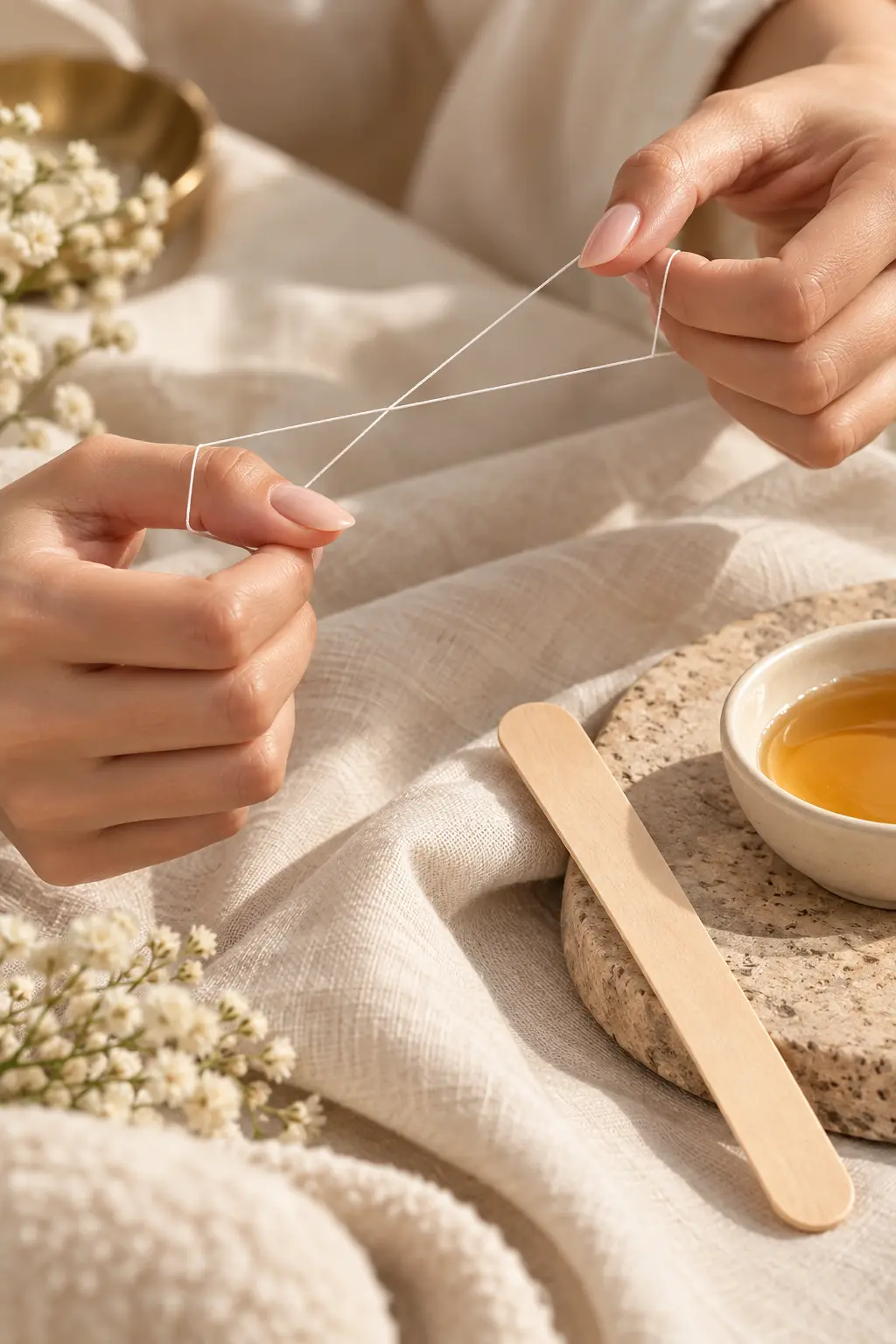
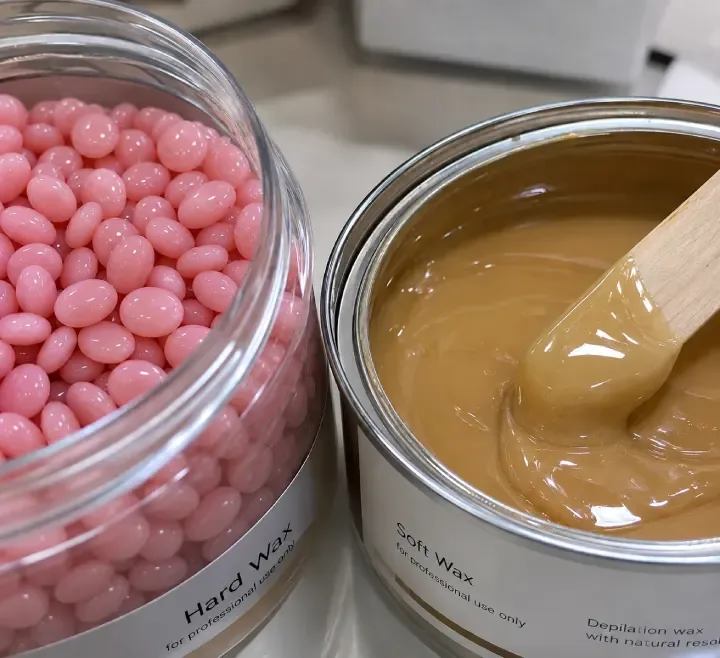
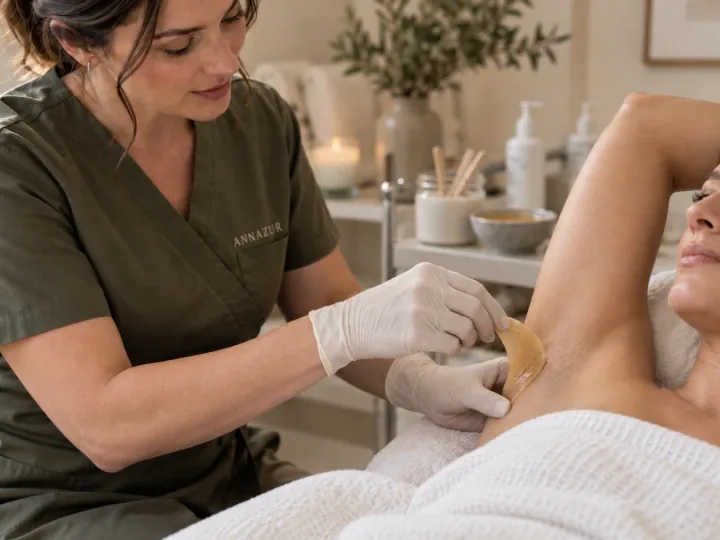
Hard wax is applied warm and gradually firm up as it cools. Once it has set but is still flexible, the wax itself becomes the strip: the esthetician lifts one edge and removes it by hand, without paper or cloth strips. Hard wax adheres primarily to the hair rather than strongly to the surface of the skin.
Timing matters. The wax needs a few moments to grip the hair and reach the right texture for removal. The esthetician keeps the skin taut and removes each section close and parallel to the skin.

Ruzanna
18 years of experience
Expert tip
Hard wax stays flexible as it sets, so it follows body contours and makes precise application easier on curved or uneven areas.
Every skin and every schedule is different — the esthetician can tell you in a minute what this means for you.
How soft wax works
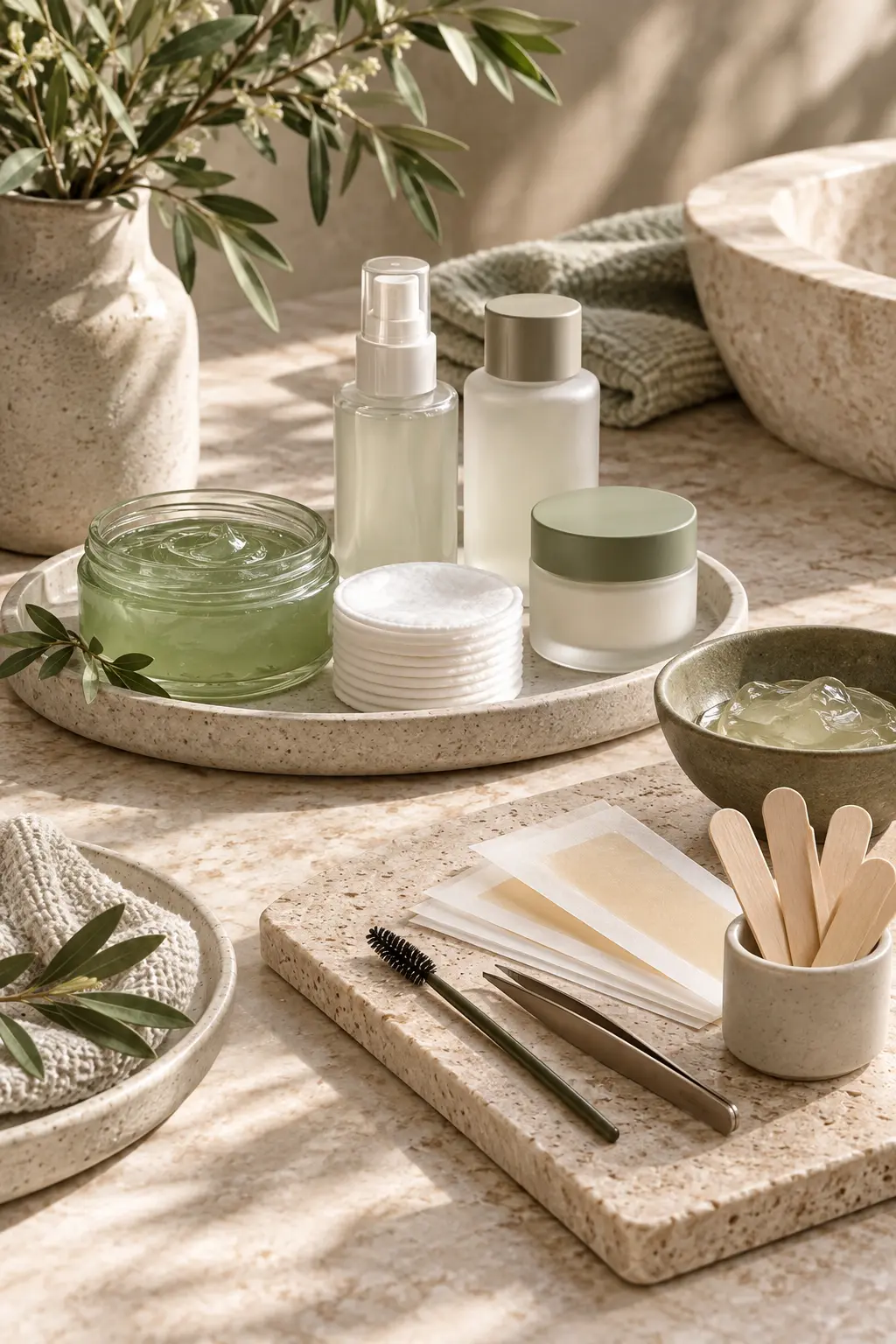
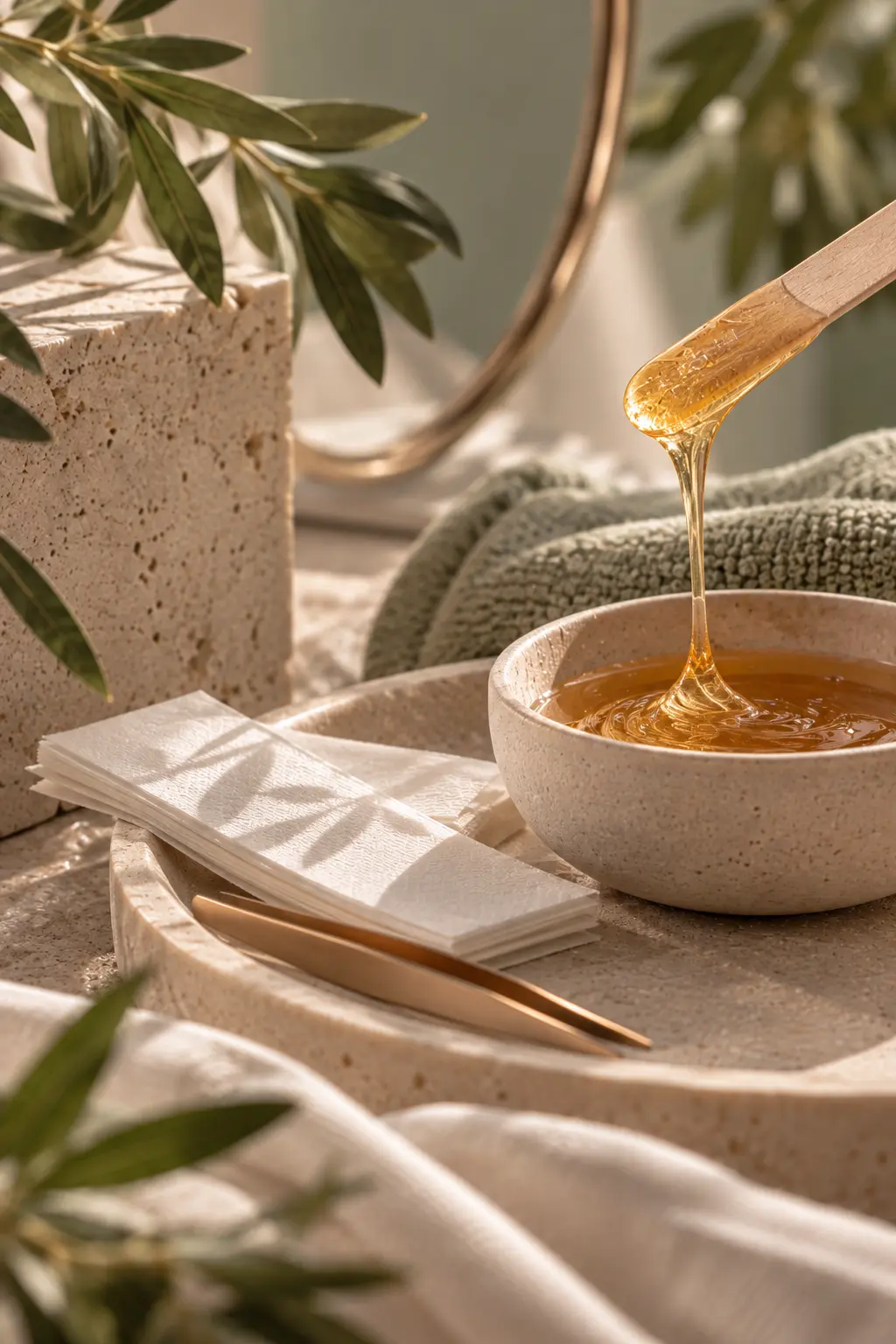
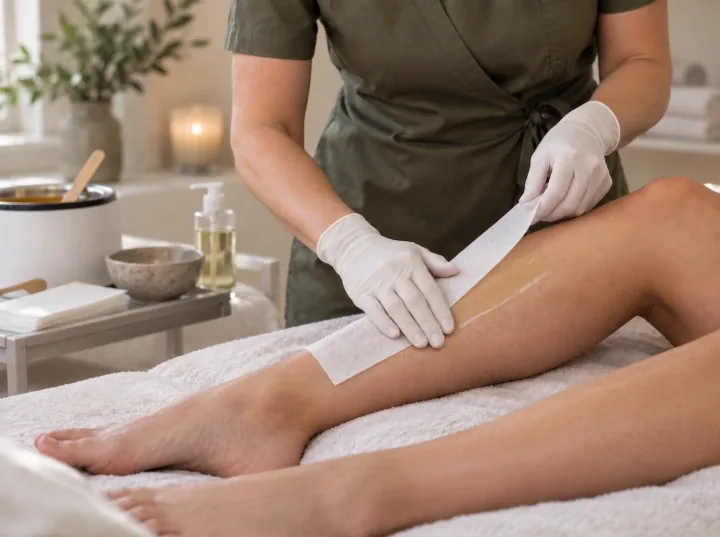
Soft wax is applied warmly in a very thin layer, usually with a spatula or roller. Unlike hard wax, it does not set into a strip that can be lifted on its own. A paper or cloth strip is pressed over the wax and removed together with the wax and hair. Soft wax adheres to both the hair and the surface of the skin, which is one reason it is commonly used in thin layers over larger areas.
Because only a thin layer is needed, the esthetician can spread it over longer sections of skin at a time.
Ruzanna
18 years of experience
Expert tip
This technique is especially practical when working across broad, relatively flat areas like legs and arms.
Which wax is used for Brazilian or bikini waxing?
Hard wax is commonly used for Brazilian and bikini waxing because it can be applied and removed in small sections. This gives the esthetician more control when working around curves and areas where hair may grow in different directions.
Which wax is used for different body areas?
The type of wax used often depends on the size and shape of the area, as well as the hair texture and growth pattern.
| Body area | Wax commonly used | Why |
|---|---|---|
| Brazilian / bikini | Hard wax | Easy to work with in small sections and around curves. |
| Underarms | Hard wax | Hair may grow in several directions. |
| Face | Hard wax | Allows precise application on small areas. |
| Arms | Soft wax | Covers longer sections efficiently. |
| Legs | Soft wax | Practical for broad, relatively flat areas. |
| Back / torso | Depends on the service | The area and hair density can vary. |
These are common examples rather than fixed rules, and your esthetician may use a different type of wax depending on the specific service and their technique. For example, soft wax is often used on legs because it works well over large areas, but hard wax may be chosen for smaller sections with coarser hair or more detailed work.
So, you do not need to choose the wax type yourself before your appointment. Your esthetician will select the wax type that best fits the area and the service. If you are curious, you can always ask why they chose hard or soft wax for your service.
What to tell your esthetician before waxing
Before your appointment, tell your esthetician about active irritation or sunburn, recent chemical peels, and any retinoids or prescription acne medications you use. These can make the skin more sensitive to waxing. Depending on the skin condition, waxing may need to be postponed.
Also mention if you have had a strong reaction to waxing before or if you tend to get ingrown hairs. This gives your esthetician useful information when planning the service and aftercare.
Why a specialist may use more than one wax
An esthetician may use both hard and soft wax during the same appointment – and sometimes within the same body area.
- For example, soft wax may be used across the main surface of the legs or arms, while hard wax can be useful for smaller sections that need more precise work.
- Hair within one area does not always grow uniformly: it may change direction, grow at different angles, or form a swirl-like pattern. Working with smaller sections makes it easier to follow those changes.
- If some hair remains after soft waxing, isolated hairs can be removed with tweezers. For a larger localized section, the esthetician may use hard wax instead of making another broad pass with soft wax, depending on the skin and the products being used.
Like waxing, sugaring removes hair from the root, but it uses a sugar-based paste and a different removal technique.
Sugaring is not necessarily better than waxing. Some clients prefer one method simply because their skin and hair respond better to it. An esthetician can help you compare the two based on your previous experience with hair removal.
Ready to book, or want to ask first? Both take the same appointment.
Frequently asked questions
Is hard wax better than soft wax?
Not necessarily. Hard wax is often practical for smaller sections, curves, and coarse or multidirectional hair, while soft wax is efficient for covering larger areas. The best choice depends on the area of your skin and the way the hair grows.
Do I need to choose the wax type before my appointment?
No, you do not need to decide between hard and soft wax before your appointment. The esthetician chooses the product based on the body area, hair characteristics, and how the skin looks and feels that day. If you have had a good or bad experience with a certain type of wax before, mention it. That information can help the esthetician make the right choice for your service.
Is hard wax the same as sugaring?
No, hard wax and soft wax are two options within waxing. They differ in texture, application, and removal, but both use wax to remove hair from the root. Sugaring is a separate hair-removal method. It uses sugar paste and a different application and removal technique. If you are choosing between wax and sugar paste, you can learn more on our Jacksonville organic sugaring page.
Can a Brazilian wax be done with soft wax?
Yes, some estheticians use soft wax, hard wax, or a combination of both for Brazilian waxing. Hard wax is more commonly used because it allows the area to be treated in smaller sections and gives the esthetician more control around curves and different hair-growth directions.
Why did soft wax feel stickier than hard wax?
Soft wax is designed to remain tacky because a paper or cloth strip needs to adhere to it for removal. Hard wax firms up as it cools and forms its own removable layer. That difference in texture is a normal part of how the two wax types work.
Is hard wax better for coarse hair?
Hard wax often works well for coarse or dense hair because it grips the hair as it sets and allows the esthetician to work in smaller, controlled sections. This can be especially useful on areas such as the bikini line and underarms. However, coarse hair does not automatically require hard wax. The choice also depends on the body area, hair density and direction of growth, and how sensitive the skin is in that area.
Is hard wax less painful than soft wax?
Hard wax may feel more comfortable, especially on sensitive areas, because it primarily grips the hair rather than adhering as strongly to the surface of the skin. Soft wax adheres to both the hair and the skin, so the sensation during removal can feel different. Pain still depends on the body area, hair density, individual sensitivity, and the esthetician’s technique.
The right wax fits the area
Hard wax offers control for small, curved areas. Soft wax covers larger, flatter sections efficiently. Your esthetician chooses what fits your skin, hair, and service.