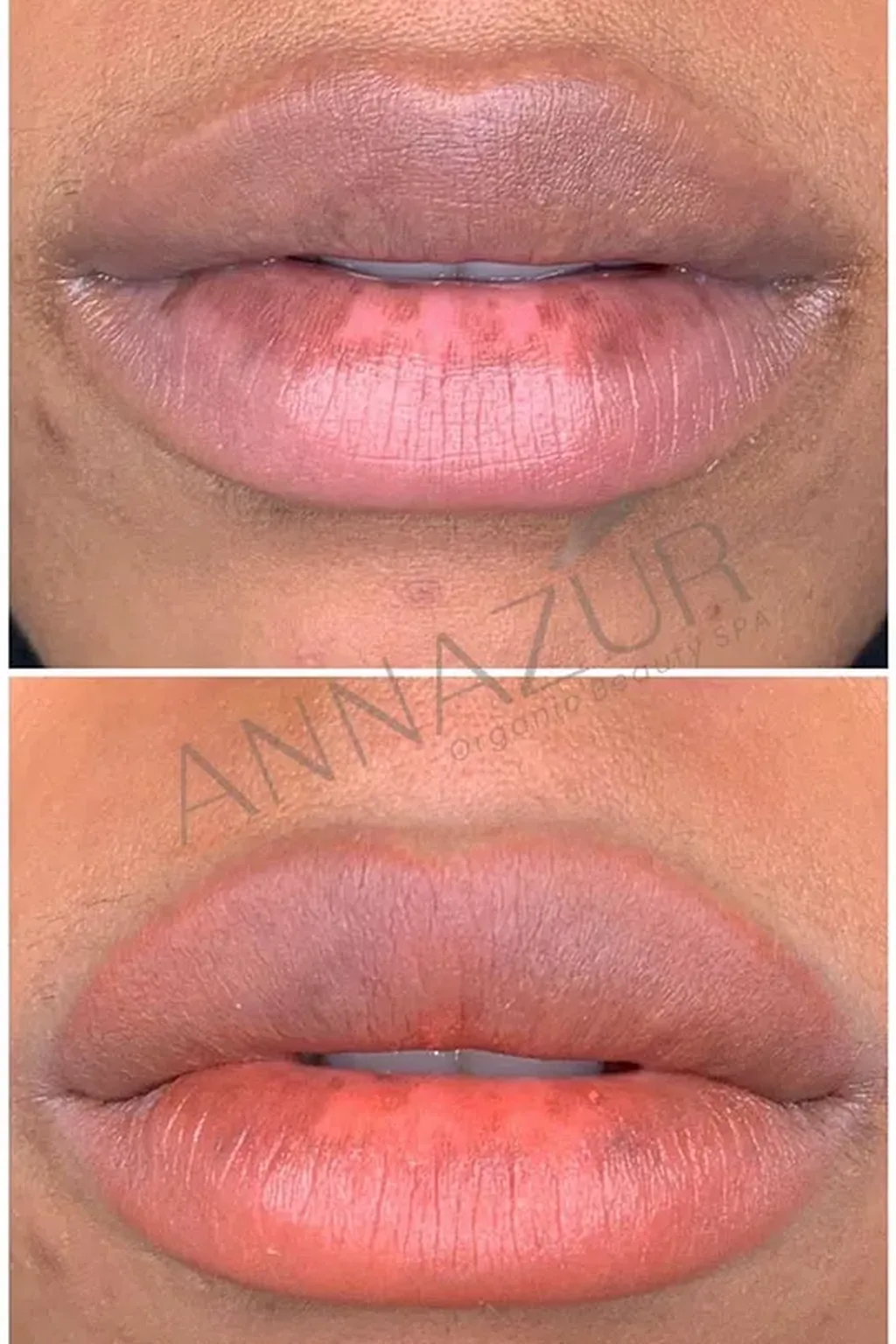
How to practice microblading: latex skin to live model
Practicing microblading starts on latex practice skin to build hand position and blade control, then moves to a supervised live model for everything latex cannot teach. ANNAZUR Academy in Jacksonville, Florida includes both stages.
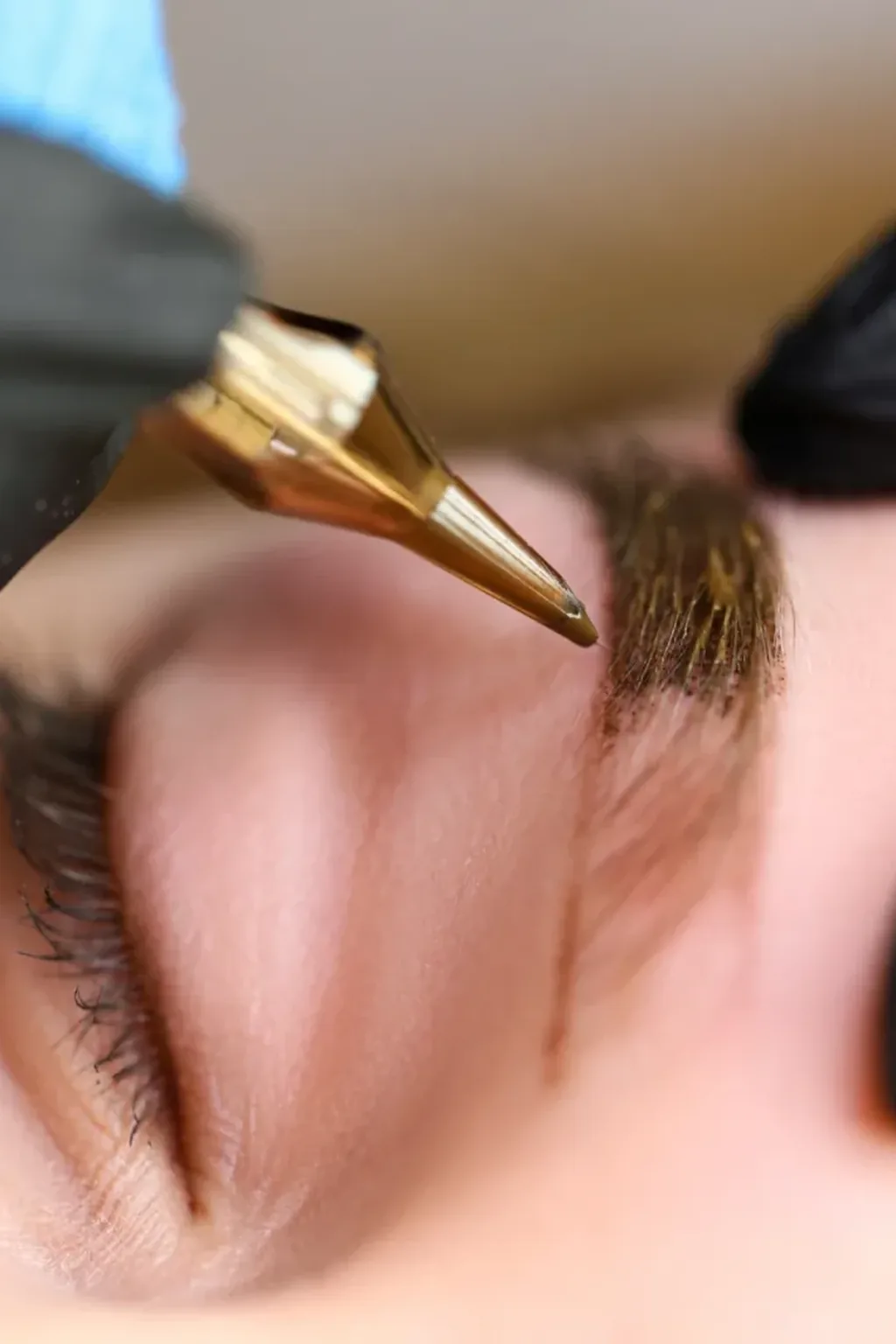
Latex does not bleed, does not flinch and does not have an opinion about the shape. That is precisely why you start there — and precisely why you cannot stay there.
What latex is for
Latex teaches the mechanics in isolation: how you hold the machine, how your hand sits, how much pressure the stroke needs, how a line behaves when your wrist is at the wrong angle. All of that is hard enough without a person attached to it.
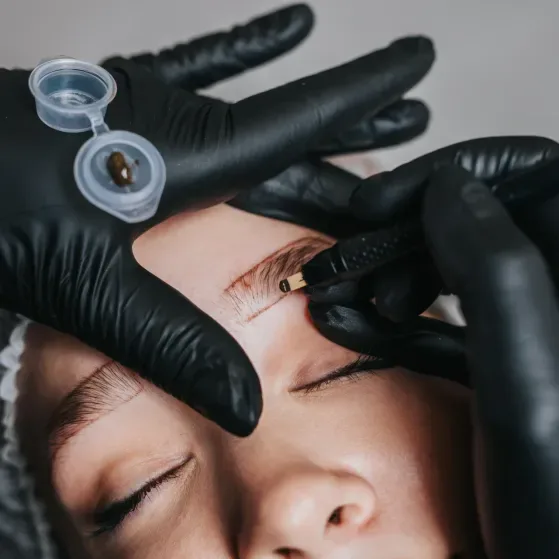
It is also the only stage where you can repeat the same stroke twenty times. On skin you get one attempt, because every pass costs trauma.
What latex cannot teach
Skin stretches, bleeds, responds differently from forehead to tail, and varies between clients in ways no practice sheet imitates. Latex is uniformly cooperative, which makes it a good teacher of mechanics and a bad teacher of judgment.
So the question is not whether to practice on latex, but when to stop.
Want to know how the practice days run? Ask an instructor — the consultation is free.
The demonstration is the bridge
On day two the trainer performs a complete procedure on a live model, beginning to end, while you watch and ask questions at every stage. It is tempting to treat this as downtime. It is the opposite — it is the only chance you get to see the whole thing done correctly, in order, at real speed.
Watch the parts that are not strokes: the consultation, the mapping, how long the numbing actually takes, what the trainer does when the client shifts. Then you go back to latex and practice what you just saw, while it is fresh.
Your own model, with someone standing there
Day three is the full procedure on your own live model, with your trainer beside you giving corrections as you work rather than feedback afterwards. The difference matters: a correction mid-stroke changes the habit, a critique at the end changes only your mood.
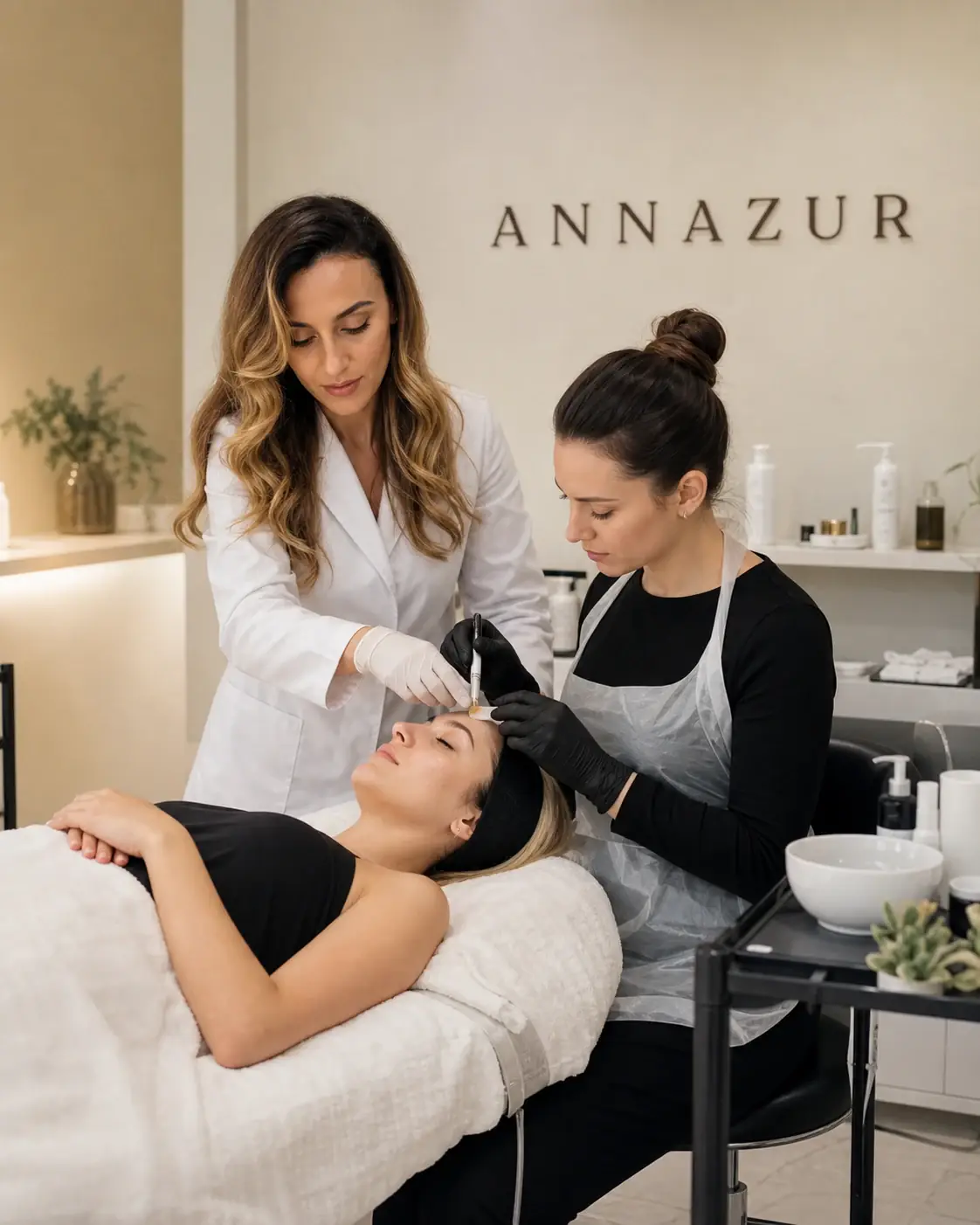
This is also where the nerves get handled. Everyone is nervous. The first time is going to happen somewhere, and it should happen with a trainer at your shoulder rather than with a paying client.
Why it is staged this way
Each stage removes one unknown. Latex removes mechanics. The demonstration removes the question of what the whole procedure looks like. Your own model removes the question of whether you can do it with a real person in the chair.
Course structure, schedule and enrollment are on the course page. Days can run consecutively or spaced out, depending on how much practice time you want between them.
Also in this series:
The short version.
- Latex: mechanics in isolation, and the only place you can repeat a stroke.
- Its limit: it is uniformly cooperative; skin is not.
- The demonstration: watch the parts that are not strokes — mapping, timing, consultation.
- Your model: corrections mid-stroke build habits; critique afterwards does not.
- The order: each stage removes one unknown before the next one adds a harder one.
See the microblading course, or book a free consultation with an instructor at the spa. The free consultation for permanent makeup courses is held at our Hodges location, 13400 Sutton Park Dr S, Jacksonville.
See the microblading coursePractice stages. Questions answered plainly.
How much latex practice is there?
It runs across all three days — building technique on day one, reinforcing the demonstration on day two, warming up on day three.
Who provides the live model?
Models are arranged as part of the course. All hands-on materials are included too.
What if my model’s result is not perfect?
It is a training procedure under supervision, and correction happens as you work. That is the point of doing it there rather than later.
Can I just practice at home on latex instead?
You will learn mechanics and nothing else. Mapping, consultation and judgment on real skin are not available from a practice sheet.
Can I space the days out?
Yes. Scheduling is flexible — consecutive or spaced, whichever gives you more useful practice.
Is there feedback after the course?
Yes, a month of instructor support with homework review.