Brazilian Wax vs Sugaring. How to Choose for the Bikini Area
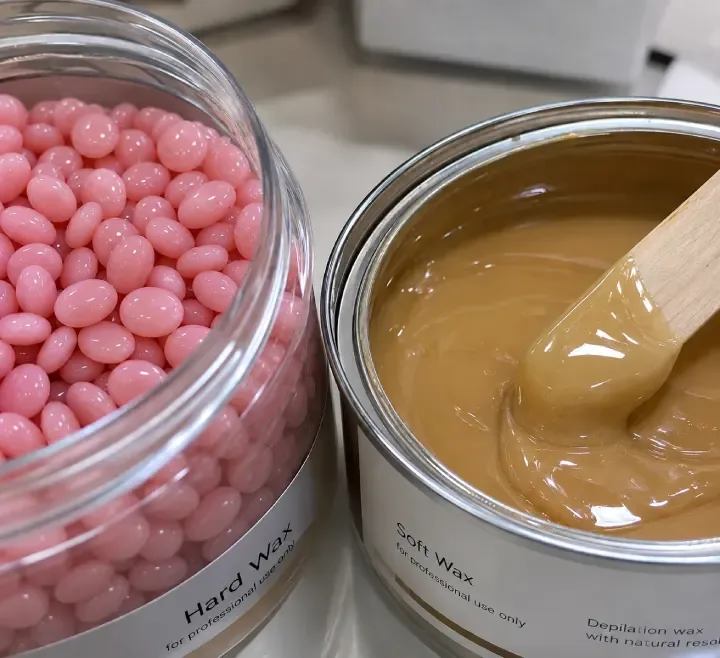
A Brazilian wax and a Brazilian sugar wax clear the same hair from the same area. What changes is the stuff that touches your skin and which way it comes off. Sugaring uses a paste of sugar, water, and lemon at close to body temperature, pulled in the direction your hair grows. Waxing uses a warmed formula pulled against the grain, with a firmer grip on coarse hair. Go with sugar if heat or lifted skin has burned you before, and wax if your hair is coarse and you want the shortest appointment.

Choosing between sugar and wax down there isn’t really a product question — it’s a question about the appointment you’re about to book. Most people are fuzzy on the salon vocabulary too, from a French bikini to a full Brazilian. This guide sorts out the terms, compares how each one actually feels on bikini-area skin, and gets you to the booking page knowing exactly what to ask for.
The Brazilian area. Its own decision.
What works on your legs doesn’t automatically translate down here. The hair is usually coarser, the skin reacts differently, and most people walk in a lot more nervous than they would for an arm wax. So the Brazilian deserves its own conversation, not a line item in a general body-hair guide.
Want the whole-body comparison instead? That one’s here: sugaring versus waxing, head to toe. This page sticks to the bikini area.
Every skin and every schedule is different — the esthetician can tell you in a minute what this means for you.
Bikini line. French. Brazilian. Know what you’re booking.
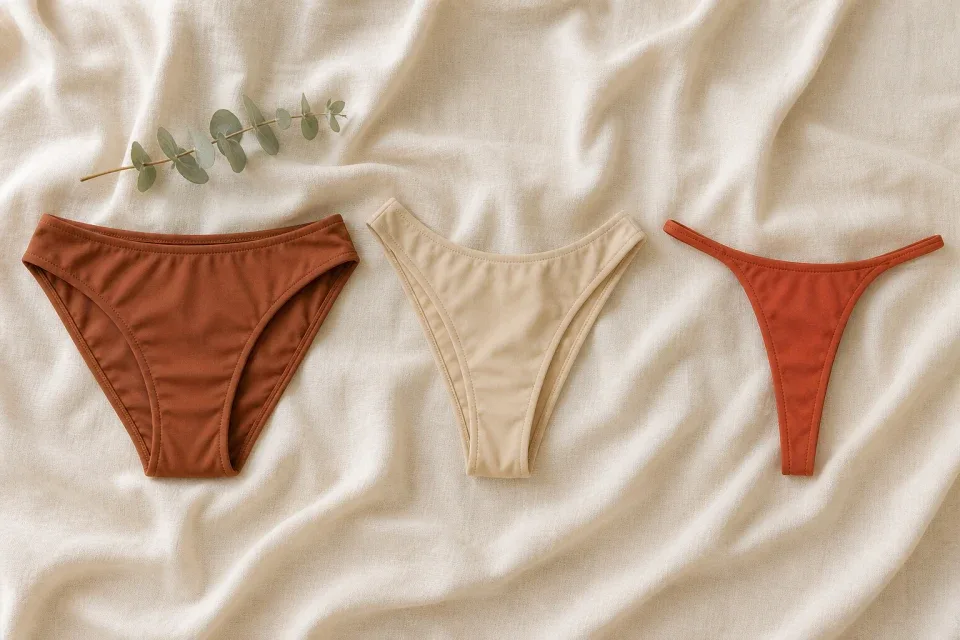
Salons here use these terms pretty consistently, so knowing them is the difference between what you pictured and what you walk out with. A full Brazilian clears the front, everything on the outside, the upper inner thighs, and the strip between your cheeks.
| What you book | What comes off | Who books it |
|---|---|---|
| Bikini Line | Just what shows outside the panty line, plus the inner thigh | First-timers and modest swimwear |
| French Bikini | Deep on the front and sides; a strip stays in front, and the back is left alone | High-cut swimwear, without going completely bare |
| Full Brazilian | Front, underneath, and the back — with an optional shape left in front | Thongs and total smoothness |
Coverage and method are two separate calls. Pick how much comes off first, then pick sugar or wax — every level above works with either one.

Ruzanna
18 years of experience
Expert tip
“French and Brazilian get mixed up constantly. Here’s the line I give at consultation: if you want the back smooth too, you want a Brazilian — the French stops at the front and sides. In eighteen years, that one sentence has spared more people a bad surprise on my table than anything else I say.”
Sugar. Body temperature. With the grain.
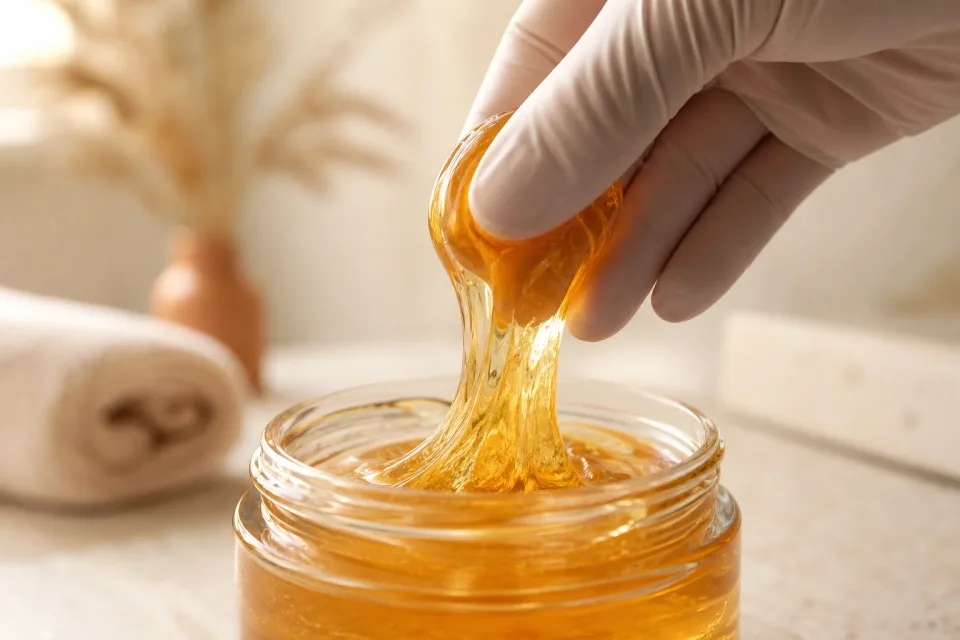
Sugaring wins people over for simple reasons: the paste rinses off with water, there’s no strip to peel, and the work happens in small sections. For the bikini area there’s a bigger one. The skin down there is thinner than the skin on your legs and sits over far more blood vessels, so it shows every bit of stress you put on it.
Dermatological literature on hair removal notes that pulling plus excess heat stresses the outer skin barrier and can leave temporary redness and swelling wherever blood supply is heavy. Sugar paste goes on at close to body temperature, so heat never enters the picture. Wax has to be warmed to stay workable, which puts temperature control on the product and on your esthetician’s hands.
The other real difference is direction. Sugar comes off the way your hair grows; wax comes off against it. That’s why most people describe sugaring as a duller sensation, and it’s also why paste can grab hair that wax would skid right over.
| Feature | Body-temperature sugaring | Hard wax |
|---|---|---|
| Temperature | Close to body temperature | Warmed to melt; your esthetician manages it |
| Direction of removal | With the grain | Against the grain |
| What it grips | Hair and dead surface cells | Can grab live skin if the area isn’t prepped right |
| Shorter hair | More forgiving if you’re a little early | Wants full working length |
| Coarse hair | Handles it, sometimes in two passes | Strongest grip of the two |
Wax. Coarse hair. The faster pull.
Wax is still the default for Brazilian and bikini services, and the range behind it is wider than most people realize. Formulas are made for different skin types — sensitive, oily, normal — including low-temperature blends and versions with soothing additives. A good esthetician picks the product for the area and the service, not out of habit. Down here that usually means hard wax, which grips coarse hair well enough to clear it on the first pull.
Wax also covers ground faster. If you want to be in and out, and your skin has never given you trouble, that speed is a real advantage, not a trade-off.
The material is only one piece of it. If pain is your main worry, our comfort guide gets into prep and breathing.
Sugar. Water. Lemon. And one hygiene rule.
Sugaring paste is three food-grade ingredients: sugar, water, and lemon. Nothing melts onto you, and nothing is left behind that water won’t rinse away. Wax is a manufactured product built on a resin or beeswax base, with additives chosen for skin type and working temperature, warmed before use and lifted off with the wax itself or a strip.
For a service this intimate, hygiene matters as much as the material. Ask any salon whether they follow a strict no-double-dipping rule — meaning a stick or piece of paste that has touched your skin never goes back in the pot. At ANNAZUR it’s absolute, no matter which one you book. Sugar has one bonus worth knowing: it’s concentrated enough that bacteria can’t live in it, which is part of why the technique survived centuries in hot climates.
Ask this. Every time.
- Do you have a strict no-double-dipping policy?
- Is fresh paste or fresh wax used for every client?
- Do you change gloves between areas in the same appointment?
Sugar has a catch. So does wax.
A fair comparison names the downsides. Neither one wins outright, and the honest gap between them is narrower than the marketing on either side wants you to think.
| Method | The catch |
|---|---|
| Sugaring | It lives or dies on the hand doing it. The flicking technique takes years to get right, and a badly trained hand makes sugaring hurt more, not less. It’s also slower over bigger areas, and very coarse hair may need a second pass. |
| Waxing | Heat is involved, so temperature control is on the product and the person using it. It comes off against the grain, which feels sharper to most people, and it can grab live skin if the area wasn’t prepped properly. |
Both pull hair from the root, so both leave the same short-lived redness, and both can lead to ingrowns if you skip aftercare. Neither one fixes ingrown hairs on its own.
The butt strip. Two minutes. Not what you fear.

The step that scares first-timers most is clearing the hair between your cheeks. Feeling shy about it before your first full Brazilian is completely normal, and every esthetician has seen that face before.
For a licensed pro this is a routine two minutes. The hair back there grows in thinner and holds on less than the hair up front, and most first-timers are surprised to find it’s the easiest part of the whole session. Clearing it also cuts down on sweat and chafing, which anyone who works out notices right away.
Estheticians look at bodies the way any clinician looks at what they’re treating. You get a private room and a drape, the focus stays on skin and hair, and it moves fast.
You get this step with either method, so it isn’t what decides sugar versus wax.
Landing strip. Triangle. Martini. Your call.
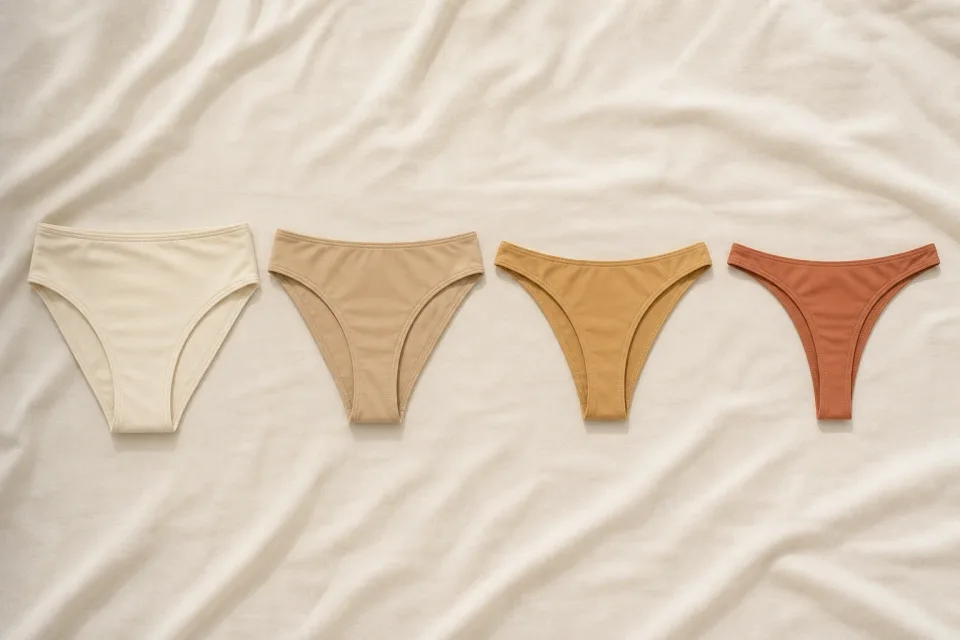
A Brazilian doesn’t have to mean completely bare. You can ask for a shape in front to match your swimwear, or just your own taste. A shape is a styling call, not a method call — any of these work with sugar or wax.
| Shape | What it looks like | Pairs with |
|---|---|---|
| Hollywood | Everything off, nothing left | Micro-bikinis and sheer fabrics |
| Landing Strip | A narrow vertical rectangle down the center | Thongs; a longer-looking silhouette |
| Triangle | The classic shape, scaled down | Standard bikini bottoms; a natural look |
| Martini Glass | Wider on top, tapering to a point | High-waisted, retro swimwear |
A little redness afterward is normal with either one, and it settles down fast.
Wax or sugar. Decide right here.
Start with coverage: bikini line, French, or full Brazilian. Then match the material to your hair and your skin history — not to whichever name sounds gentler.
Which one fits you.
- Go with sugar if heat bothers your skin, if a wax has lifted skin on you before, or if you’re a little early and your hair is on the short side.
- Go with wax if your hair is coarse, if you want the fastest appointment, and if your skin has never given you trouble.
- Either one works if you’re just curious — they clear the same area, and switching later is a conversation, not a commitment.
Before anything starts, tell your esthetician about active irritation, a recent strong exfoliation, or anything your doctor has you on, so they can work around it. For hair length and the day-of rules, our prep guide has the full checklist, and if you’re wondering how often to come back, that’s in how long a Brazilian lasts.
In Jacksonville? See exactly what’s included, and what you’ll pay, for Brazilian waxing at ANNAZUR.
Ruzanna
18 years of experience
Expert tip
“A service this personal runs on trust. We work at body temperature and in small sections, so a first Brazilian becomes your normal instead of a horror story you tell your friends — and we walk you through it before we start, never in the middle.”
Bikini line or full Brazilian. Not the same decision.
A bikini-line cleanup and a full Brazilian aren’t the same decision, even when the material is identical. The more that comes off, the more the appointment itself — privacy, positioning, how much your esthetician talks you through it — decides how the whole thing feels. Weigh that right alongside sugar versus wax.
Wax to sugar. Never the week of an event.

Don’t try a new method right before a wedding, a vacation, or a photoshoot. Switch when you have room to see how your skin answers, not when the stakes are high.
And if you have an active skin issue, or your doctor has you on something that affects your skin, the method isn’t the real question yet. Start with a conversation about the service instead of assuming either one is automatically on the table.
Key takeaways
- The bikini terms differ only in how much comes off the front and the back — pick coverage before material.
- Sugar is sugar, water, and lemon at body temperature, pulled with the grain. Wax is a warmed formula pulled against it.
- Sugaring depends more on the hand doing it; wax depends more on temperature control.
- Ask about the no-double-dipping policy no matter which one you book.
- The “butt strip” is standard, quick, and usually the easiest part of the whole thing.
Ready to book, or want to ask first? Both take the same appointment.
Brazilian wax vs sugaring. Questions, answered plainly.
What is a Brazilian sugar wax?
A Brazilian sugar wax is a full Brazilian done with sugaring paste instead of wax. The paste is sugar, water, and lemon, applied at close to body temperature and flicked off in the direction your hair grows. The coverage is identical to a Brazilian wax — front, underneath, and the back. Only the material and the direction of the pull change.
Is Brazilian sugaring the same as a Brazilian wax?
Same area, different method. Sugaring is paste-based, applied near body temperature and removed with the grain. Waxing uses a warmed wax formula removed against it.
Does sugaring hurt less on the bikini area?
For a lot of people, yes. Sugar comes off with the grain, so the follicle fights back less, while wax pulls against it and lands sharper. That said, sensitivity is personal, and an experienced hand matters more than what’s in the jar.
Does sugaring work on shorter hair than wax?
Generally yes — paste can grab hair that wax slides right over, which makes sugar the safer pick if you’re booking a little earlier than usual. It isn’t unlimited, though, so check the length rules in our prep guide before you count on it.
Which one lasts longer, a Brazilian wax or Brazilian sugaring?
Neither has an edge here. Both pull hair from the root, so what you feel afterward comes down to your own growth cycle and the coverage you booked, not the material.
What are the disadvantages of sugaring?
It leans hard on technique — done badly, sugaring hurts more, not less. It runs slower over larger areas than wax, and very coarse hair may need a second pass. It also won’t prevent ingrown hairs on its own; aftercare still does that work.
Should I switch to sugaring if waxing gives me ingrown hairs?
It might help, since the pull follows the growth direction and breaks fewer hairs below the surface — but it’s not an automatic fix. Friction, clothing, and your aftercare routine usually matter more than which one you booked.
Can I switch methods for my next Brazilian?
Usually, yes — just say so when you book. The thing that actually needs planning is timing and hair length, not loyalty to one material.
Is sugaring or waxing better for a first Brazilian?
The better first appointment is the one your salon does cleanly for the coverage you want. Plenty of first-timers lean toward sugar simply because taking heat out of it is one less thing to worry about.
Booking your very first Brazilian? Walk through it step by step — read the first Brazilian guide →
Wax or sugar is personal. Choosing isn’t.
This guide is part of ANNAZUR’s full waxing and sugaring library, from coverage styles to aftercare, so you can book your Brazilian knowing exactly what you’re asking for.