How to Avoid Ingrown Hairs After Waxing: Prevention and Aftercare
You can still lower the risk of ingrown hairs. Do not shave or tweeze between appointments. For the first 24–48 hours, keep friction, heat, and heavy sweating to a minimum. Wait until redness and sensitivity have settled before returning to gentle exfoliation.
Why ingrown hairs may happen after waxing
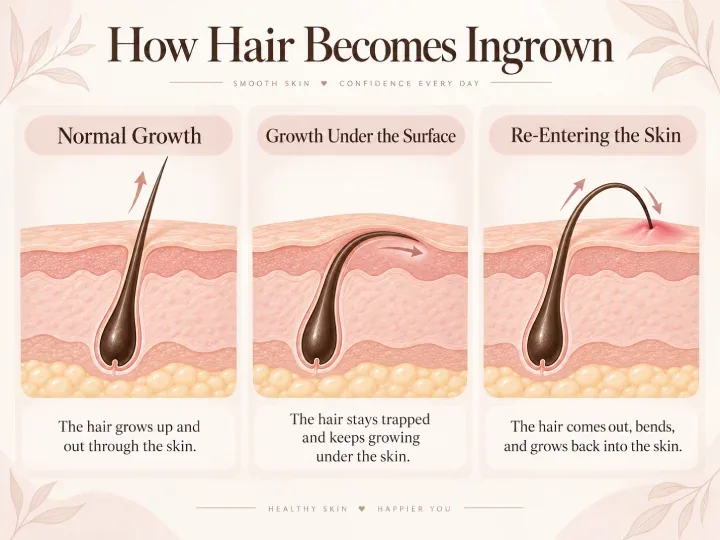
Wax pulls the hair from the follicle, but the follicle stays in place. After a while, as the new hair grows from the same spot, one of three things may happen:
- the hair grows out normally;
- it grows sideways and stays under the skin; or
- it comes out, curls, and grows back into the skin.
An ingrown hair forms when the new hair stays trapped below the surface or comes out, bends, and grows back into the skin. The skin may react to it with inflammation, causing a small bump, redness, itching, or tenderness. This reaction is not necessarily an infection, although infection can develop if the area becomes damaged or repeatedly picked.
Waxing does not automatically make hair grow inward, and not every bump that appears after an appointment is an ingrown hair. Redness immediately after waxing may simply be temporary skin irritation.
Every skin and every schedule is different — the esthetician can tell you in a minute what this means for you.
What makes ingrown hairs more likely
Hair texture and growth direction play an important role. Coarse, curly, and tightly curled hair bends more easily as it grows, while a tilted follicle directs the hair toward the surface at an angle. This makes it more likely that the hair will remain trapped or curve back into the skin.
Ingrown hairs can develop anywhere hair is removed, including the face, legs, arms, underarms, and bikini area. However, it is often higher around the bikini line and underarms, where hair tends to be coarser and may grow in several directions. Skin folds, close-fitting clothing, and repeated friction can further irritate the area.
A buildup of dead skin cells around the follicle opening may make it harder for a new hair to reach the surface. Hair that breaks during removal or is cut short by shaving between appointments may also become trapped as it grows.
Hair density does not change the direction of growth, but an area with more hairs has more potential sites where ingrown hairs can appear.
How to prevent ingrown hairs before, after, and between waxes
Each stage of the waxing cycle calls for slightly different care. Before the appointment, prepare your skin and hair. During the first 2 days, let your skin settle. Between visits, keep your routine gentle and easy to follow.
Before your appointment
A little preparation can make waxing easier on your skin and help reduce irritation afterward:
- Do not wax irritated, inflamed, or sunburned skin. Waxing may further damage sensitive skin, so wait until it fully recovers.
- Let the hair grow long enough for the wax to grip it. About 1/4 inch is usually enough for the wax to grip the hair without repeated passes.
- Exfoliate gently one or two days before the appointment if your skin tolerates it. Avoid scrubbing immediately before waxing, as freshly exfoliated skin may be more sensitive.
- Arrive with clean, dry skin. Oils and lotions prevent the wax from gripping the hair properly.
- Tell your waxing specialist if you are prone to ingrown hairs or have reacted strongly before. They can adjust the technique and aftercare.
- Mention retinoids and acne treatments. Some can make your skin more sensitive, so waxing may irritate it more than usual. If you take oral retinoids or finished treatment within the past six months, ask your doctor whether waxing is safe for you.
This will help the specialist decide whether to proceed with the service or reschedule it, and recommend the right aftercare for your skin.
The first 48 hours after waxing
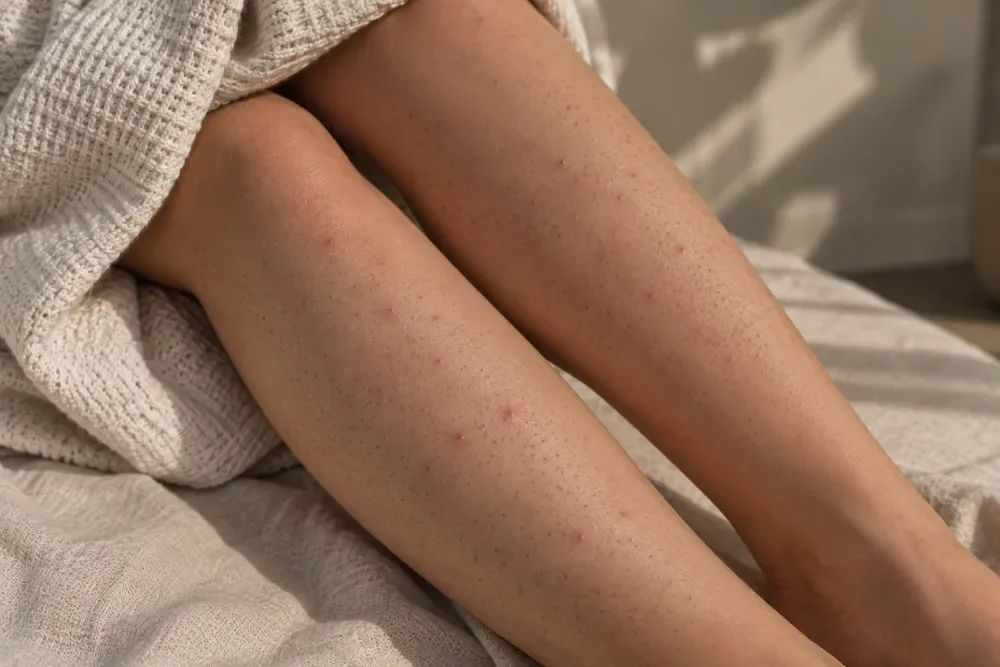
Right after waxing, your skin may be red and sensitive. Small red dots may appear where the hairs were removed. This is often a short-term reaction to waxing.
During the first two days:
- cleanse gently and pat the skin dry instead of rubbing it;
- skip harsh scrubs, brushes, exfoliating mitts, and strong active products;
- do not touch the area unless you need to, and do not squeeze the dots;
- avoid heavy sweating, overheating, and repeated friction when possible;
- choose loose, breathable clothing and underwear, especially after a bikini or Brazilian wax.
Between waxing procedures
- Return to exfoliation only after redness, burning, and sensitivity have settled. Keep it gentle and regular. You do not need to scrub every day or try to remove as many skin cells as possible at once.
- Do not combine a harsh scrub, an exfoliating mitt, and several acid products. Too much at once can irritate the skin and look like new bumps. Keep these products on the outer, hair-bearing skin and away from inner genital areas.
- If your skin feels dry or tight, a suitable moisturizer can make it more comfortable. It will not change how the hair grows or prevent every ingrown hair.
- If the problem keeps coming back, note where the bumps appear and how many days after the appointment you notice them. As well as which products you used, and whether clothing or underwear caused a lot of friction. Patterns are easier to spot when you write them down.
- If you want a consistent waxing schedule, try not to shave or tweeze between appointments. Shaving leaves the hair short and may disrupt your waxing schedule.
LET’S START YOUR WAXING SCHEDULE WITH ANNAZUR
Do ingrown hair products really work?
Products can help, but they are only one part of a good aftercare routine. An exfoliating product can help clear built-up surface cells, while a moisturizer can ease dryness. No product can change the direction a hair grows or promise that ingrown hairs will never happen.
Choose products based on the area and how sensitive your skin is. Use the product as often as the label recommends, and do not layer several active products at once. If the product causes strong burning, lasting redness, or peeling, stop using it.
What to do if a bump already appears
Do not squeeze it, poke the skin, or try to pull a hair out from deep under the surface with tweezers. That can make the irritation worse, introduce bacteria, and leave a dark mark.
Avoid shaving or waxing the area until the irritation has settled. Skip harsh exfoliation, reduce rubbing, and do not keep adding one new product after another. More products will not make the hair come out faster.
Not every bump after waxing is an ingrown hair. Red dots that appear right away may be a normal reaction to hair removal. A white tip, dark dot, or firm bump does not tell you the cause by itself. If the area is painful, becomes more inflamed, or does not go away, ask a healthcare professional.
When to ask a healthcare professional
Many small ingrown hairs clear up on their own. Ask a doctor or dermatologist if the area:
- becomes very painful, hot, or noticeably swollen;
- gets larger or the redness spreads;
- starts draining pus or other fluid;
- does not improve or keeps flaring up in the same spot; or
- leaves noticeable dark marks or scars.
Fever, chills, or feeling unwell along with skin inflammation are all reasons to seek medical care. Your esthetician can talk through waxing technique, timing, and everyday aftercare. A healthcare professional should handle possible infection or ongoing skin problems.
If ingrown hairs continue even with consistent aftercare, a dermatologist can talk with you about other hair-removal options. The best fit depends on the area, your skin, and your hair texture.
What to discuss before your next appointment
Before the next service, tell your esthetician:
- where the bumps appear;
- how many days or weeks after waxing you notice them;
- whether you shave or tweeze between visits;
- which products you use at home; and
- whether there has been severe pain, pus, long-lasting inflammation, or dark marks.
This information can help you decide whether to change your preparation, the time between appointments, or your home routine. If the skin is still sore, hot, broken, or inflamed on appointment day, contact the salon ahead of time. You may need to reschedule and have the area checked by a healthcare professional first.
Ready to book, or want to ask first? Both take the same appointment.
Clear answers about ingrown hairs
Can waxing cause ingrown hairs?
Yes, ingrown hairs can happen after waxing, shaving, or tweezing. The chance depends on your hair type, growth direction, the area, the hair-removal technique, and your routine while the hair grows back.
How soon after waxing do ingrown hairs appear?
There is no exact timeline. They usually become noticeable as the hair starts growing back, so a bump may show up after a few days or later. Redness and dots right after the appointment do not necessarily mean an ingrown hair.
Should I exfoliate every day?
No, exfoliating too often or too aggressively can irritate your skin. Wait until the skin has settled, then follow the product directions and your esthetician’s advice for that area.
Can tight underwear or leggings cause ingrown hairs?
They are not a direct cause by themselves, but rubbing, heat, and moisture can irritate skin after waxing or make an already irritated spot feel worse. After a bikini wax, choose loose, breathable underwear and clothing for a while.
Do white bumps or black dots always mean an ingrown hair?
No, different skin reactions can look similar. Do not squeeze the area or try to figure out the cause from color alone. If pain or inflammation gets worse, fluid appears, or the skin is not improving, ask a healthcare professional.
Does regular waxing guarantee no ingrown hairs?
No, keeping a regular schedule can make your routine more predictable and help you avoid switching between waxing, shaving, and tweezing. But it does not change the natural direction of hair growth, so regular waxing still cannot guarantee that you will never get an ingrown hair.
Prepare your skin before the appointment, protect it for the first 48 hours, and keep exfoliation gentle in between. That is more useful than chasing every new ingrown-hair product on the shelf.