Sugar Waxing on Your Face. Yes. With Conditions.
Yes. Sugar paste is one of only two materials a professional should put on your face, and it is the gentler of the two. It goes on at body temperature and grips hair and dead surface cells rather than living skin. The conditions are real, though: strip wax has no place on facial skin, hair needs to be about a quarter inch long, and your specialist has to know what skincare you have been using before a single hair comes off.
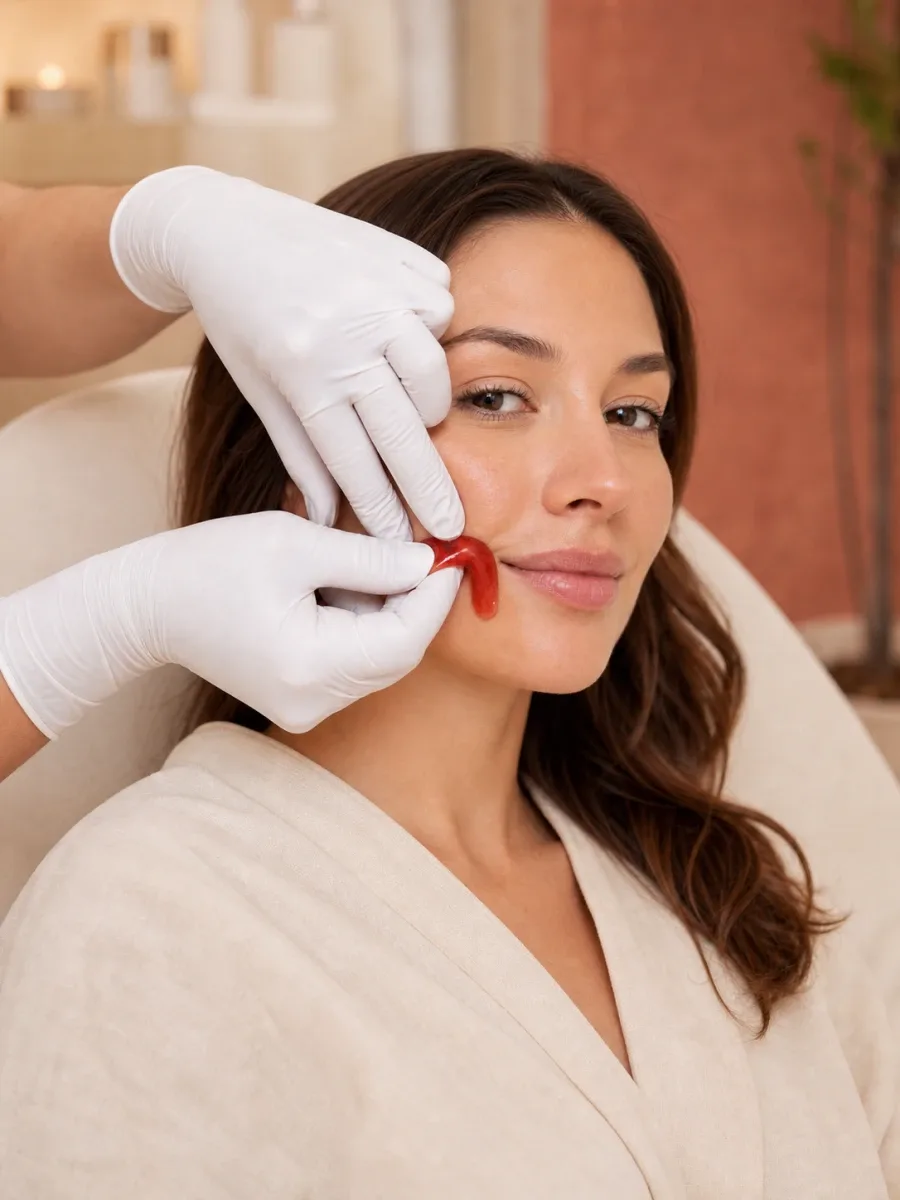
The skin over your upper lip is a fraction of the thickness of the skin on your legs. That single fact is why facial hair removal is its own conversation, why one common salon material is off the table entirely, and why a good esthetician asks about your skincare routine before touching your face. Here is what actually applies when the area is your lip, chin, cheeks, or brows.
Your face is not your legs. Thinner skin, different rules.
Facial skin is thinner, sits closer to bone, and carries far more nerve endings and surface blood vessels than the skin on your legs or arms. It also gets the most product: serums, acids, sunscreen, makeup. Treating it with the same material and the same pull you would use on a calf is the most common mistake in hair removal, and the one with the most visible consequences.
That is why facial hair removal is worth deciding separately from a body-hair method. For the wider comparison across the body, see our sugaring versus waxing breakdown. This page stays on the face.
There is a second difference, and it changes the technique: your face carries two completely different kinds of hair, and they do not behave the same way under paste.
Every skin and every schedule is different — the esthetician can tell you in a minute what this means for you.
Peach fuzz. It will not grow back thicker.
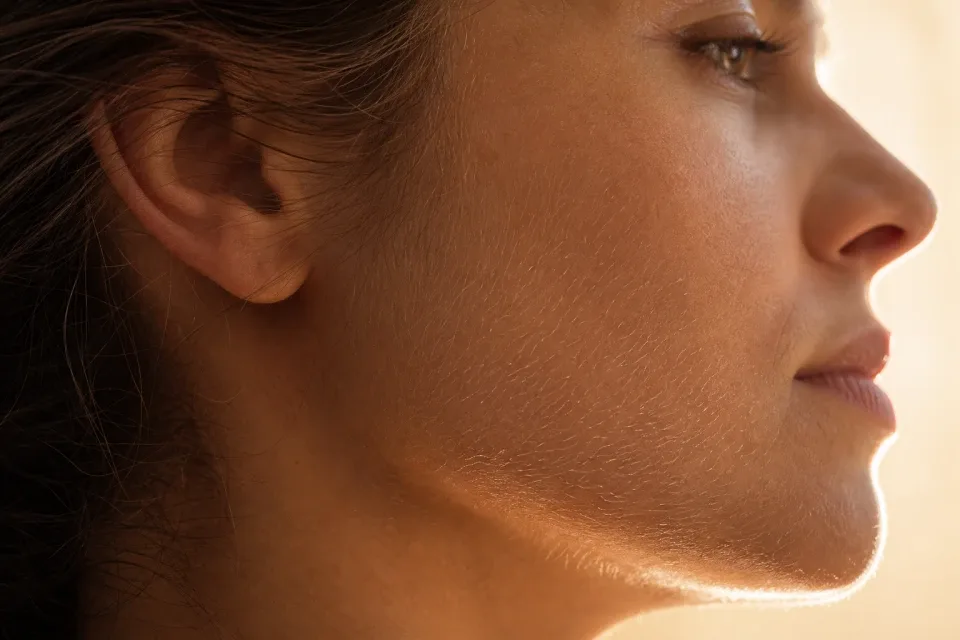
Most of your face is covered in vellus hair — the fine, pale fuzz that softens the light on your cheeks and jaw. It is not a cosmetic flaw; it helps regulate temperature. In a humid climate it also holds sweat, sunscreen, and oil against the skin, which is why a lot of clients notice their skincare works better and their makeup sits flatter once the fuzz is gone.
The fear that stops people is the oldest myth in hair removal: that removing it makes it come back darker and coarser. It does not. Removing hair from the root cannot change your hormones or your genetics, and nothing about the follicle is altered by the pull. What changes is the tip. Hair that grows in naturally comes to a fine, tapered point; hair that has been cut or snapped has a blunt end, and a blunt end reads as stubble under your fingertips. That is the whole illusion.
| Feature | Vellus — peach fuzz | Terminal — chin and lip |
|---|---|---|
| Look and feel | Very fine, pale, soft | Coarse, darker, wiry |
| Root | Shallow, close to the surface | Deep, firmly anchored |
| What can go wrong | Snaps at the surface instead of releasing | Breaks under the skin if pulled the wrong way |
| What it needs | A material that grips fine texture gently | Removal in the direction the hair grows |
Strip wax. Never on your face.
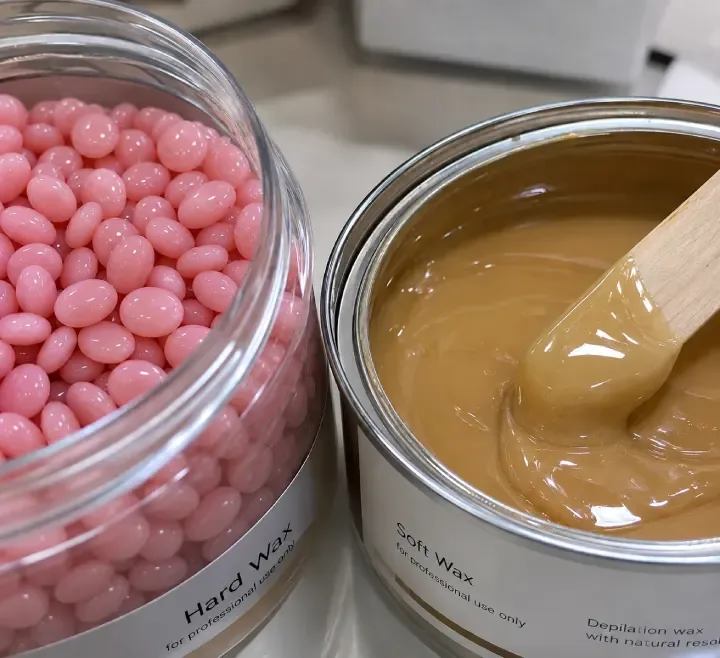
This is the one hard rule on this page. Soft wax — the kind spread thin and pulled off with a cloth or paper strip — bonds to living skin as well as to hair. On a leg that is uncomfortable. On an eyelid, an upper lip, or a cheek it is how skin gets lifted: the top layer comes away with the wax and heals like a graze. A professional working on a face reaches for hard wax or sugar paste, and nothing else.
The American Academy of Dermatology makes the same point about skin that has been thinned or sensitized by other products: the more compromised the surface, the more a strong adhesive can take with it. On the face, where almost everyone is using something active, that margin is small enough to respect by default.
If you have ever had wax lift skin anywhere on your body, say so at the consultation. It changes what your specialist chooses.
Sugar or hard wax. What each one grips.

Sugar paste is three food-grade ingredients: sugar, water, and lemon. It is worked at close to body temperature, so heat is not part of the equation, and it lifts hair along with dead surface cells rather than bonding to live ones. Hard wax is a manufactured formula that is warmed, allowed to set around the hair, and lifted without a strip. Both are legitimate on a face. They are not identical.
| Feature | Sugar paste | Hard wax |
|---|---|---|
| Temperature | Close to body temperature | Warmed; the specialist manages it |
| What it holds onto | Hair and dead surface cells | Sets around the hair; grips skin slightly |
| Direction of removal | With the growth | Against the growth |
| Shorter hair | More forgiving on fine fuzz | Wants full working length |
| Cleanup | Rinses with water | Needs an oil-based remover |
For fine work around the brow and the vellus hair on the cheeks, most estheticians prefer paste or pinpoint amounts of hard wax over anything spread broadly. Precision matters more on a face than coverage does.
Chin and upper lip. Terminal hair, a different pull.

The dark, wiry hairs that appear on the chin, jawline, and upper lip are terminal hairs, and they are usually hormonal rather than something you caused. They sit deeper, hold harder, and sit in the most nerve-dense part of the face. Pulled against the direction they grow, they resist — and a hair that resists can snap below the surface instead of releasing.
This is where sugaring’s mechanics earn their reputation on the face. The paste is worked into the follicle opening against the growth and then flicked off along it, so the hair leaves the way it came in. Less breakage, less of the sharp catch that makes people flinch on the lip.
If discomfort is your main concern rather than the material, our comfort guide covers preparation and breathing in detail.
Before you book. One conversation that matters.

Facial skin rarely arrives untouched. Acids, retinoids, acne treatments, recent peels, a new serum — all of them change how the surface behaves under an adhesive, and none of them are visible to your esthetician unless you say so.
Tell your specialist about all of this.
- Retinoids and acne medication, prescription or over the counter.
- Recent peels or strong exfoliating products.
- Any current irritation, broken skin, or active breakout in the area.
- Any restriction a healthcare provider has given you.
If the question is medical or prescription-related, ask a healthcare professional before booking. A salon can tell you what a material does to skin; it cannot tell you what your prescription is doing to yours. Where there is any doubt, a good specialist will reschedule rather than proceed — and that is the right call, not a lost appointment.
Length. Timing. How often.
The practical answers are short, and they are the ones people actually search for.
What applies to a facial appointment.
- Hair length: paste works from about 3 mm, and roughly a quarter inch is the comfortable target for the face. Much longer than that and the appointment gets less pleasant — trim rather than skip.
- How long it takes: a facial zone is quick. Two to five minutes for a lip or chin, longer for a full face with brow work.
- How often: roughly once a month for most clients, since facial hair grows more slowly than body hair.
- How long it lasts: three to four weeks between appointments is typical, and the gap tends to stretch with regular visits.
Afterwards, keep it simple: moisturize, skip heavy makeup for the first day while the follicles are still open, and hold off on scrubs for a few days before reintroducing gentle exfoliation. General pre-appointment rules for both methods live in our preparation guide.
Temporary redness or tenderness after root hair removal is normal and usually settles quickly. If symptoms are severe, spreading, unusually painful, warm, or not improving, ask a healthcare professional — online guidance cannot diagnose what is happening on your skin.
Brows. A different service.
Brow shaping shares the material but not the method: it is architecture, done with small amounts of paste or pinpoint wax and finished by hand, and it is booked as its own service rather than as part of a face. If that is what you are after, start with eyebrow waxing.
Key takeaways
- Sugar paste is a good choice for facial hair, and the gentler of the two materials a professional should use.
- Strip wax does not belong on facial skin. Hard wax or sugar paste only.
- Removing peach fuzz does not make it grow back darker or coarser — that is the blunt tip of cut hair, not new growth.
- Terminal hair on the chin and lip prefers removal in the direction it grows.
- Tell your specialist about retinoids, acne medication, and recent peels before the appointment, and ask a healthcare professional where the question is medical.
Ready to book, or want to ask first? Both take the same appointment.
Sugar waxing on your face. Questions, answered plainly.
Can you use sugar wax on your face?
Yes. Sugar paste is one of the two materials suitable for facial skin, and the gentler of them. It is applied at close to body temperature and lifts hair and dead surface cells rather than bonding to living skin, which is what makes it workable on thin areas like the upper lip.
Is sugaring good for facial hair specifically?
It suits facial hair well because it handles both kinds at once: fine vellus fuzz that tends to snap, and coarse terminal hair on the chin and lip that resists being pulled against the grain. Paste is removed along the direction of growth, which reduces breakage in both cases.
Will removing facial hair make it grow back thicker?
No. Root hair removal does not change your hormones, your genetics, or the follicle. Hair that regrows naturally has a fine tapered tip; hair that was cut or snapped has a blunt end that feels coarse. The difference you feel is the tip, not the hair.
How long does my facial hair need to be?
Paste can work from about 3 mm, and about a quarter inch is the comfortable target. If it is much longer, trim before the appointment rather than postponing it.
Can I get my face sugared while using retinol or acne medication?
Tell your specialist first, always. Retinoids, acne medication, recent peels, and strong exfoliating products all change how facial skin responds to an adhesive, and the specialist needs that context before deciding whether to proceed. Where the question is medical or prescription-related, ask a healthcare professional before booking.
How often can I do it?
About once a month for most clients. Facial hair grows more slowly than body hair, and results usually hold three to four weeks.
Can I wear makeup straight after?
Give it a day. Follicles stay open for a while after extraction, so heavy foundation, powder, and concealer are worth skipping until the next morning.
Sugaring or shaving for facial hair?
They solve different problems. Shaving cuts at the surface and regrowth shows within a day or two; sugaring removes from the root and holds for weeks. If you are weighing the razor specifically, we cover it in should women shave their face.
Booking a facial appointment with us? Start here — face sugaring at ANNAZUR →
Delicate skin. Deliberate hands.
Facial hair removal at ANNAZUR starts with a consultation about your skincare, not with the paste. See what the appointment includes before you book.